


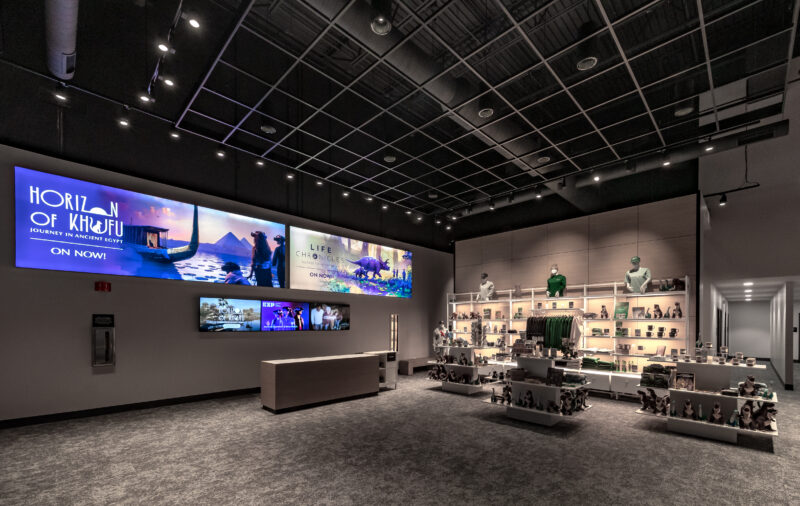
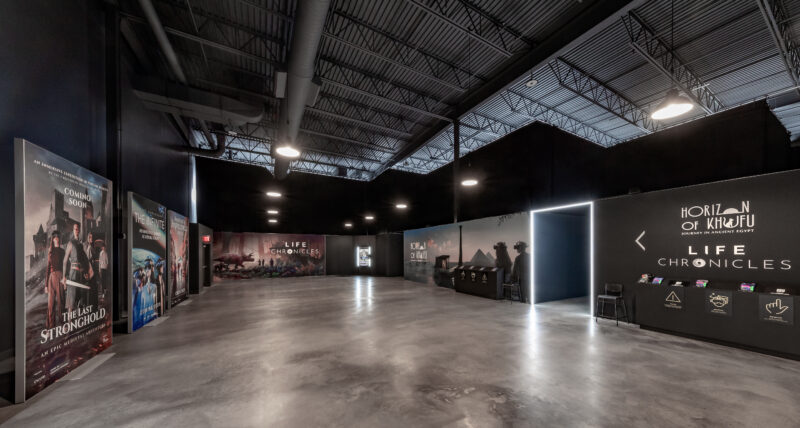
The EXP Experience Center project involved the design and construction of a 25,170 SF immersive entertainment destination in Rosemont’s bustling Pearl District. The new facility will serve as an anchor attraction in the Village’s growing entertainment corridor—housing cutting-edge virtual, augmented, and mixed reality experiences designed to redefine family entertainment.
Built on a site with sub-standard soil conditions, the project required extensive geotechnical evaluation, creative problem-solving, and constant coordination among Peak Construction, the Village of Rosemont, and the design team. From deep foundation engineering to interior finish redesigns, every phase of construction demanded agility and expertise. Despite numerous challenges—including buried debris, elevation shifts, and four rounds of interior redesign—Peak delivered the project ahead of schedule, earning recognition from the client, the Village, and the design partners for its teamwork and integrity.
CHALLENGES AND SOLUTIONS
FOUNDATION DESIGN ON A SUB-STANDARD SOIL CONDITIONS SITE
Challenge: The site’s subsurface conditions presented one of the most significant challenges in Peak’s recent history. Because the building was located on a site with sub-standard soil conditions, the soil was inconsistent and lacked the strength to support structural loads. Traditional shallow foundations were not feasible. During pile driving, crews frequently encountered hidden debris, causing piles to crack or fail before reaching bearing depth—forcing immediate field adjustments and re-coordination with engineers.
Solution: Peak worked closely with the civil and structural teams to implement a deep foundation system of approximately 180 H-piles, each ranging from 60 to nearly 100 feet in length. These piles were driven through fill material to reach competent soil layers capable of bearing the structure’s weight. When obstructions were encountered, Peak initiated rapid RFIs and collaborated with engineers to relocate or add piles without compromising load distribution. A value-engineering proposal was developed to reduce pile sizes and lengths in select areas where testing showed more stable conditions. This approach minimized unnecessary depth, cut steel tonnage, and generated measurable cost savings while maintaining full structural performance.
SITE ACCESS AND ELEVATION CONSTRAINTS
Challenge: The compact site bordered Pearl Street, a busy roadway with a 10-foot elevation change across the property, leaving little room for laydown, equipment movement, or material staging. It became apparent that access could be so restricted that equipment paths would overlap with active work zones, creating potential safety and scheduling concerns.
Solution: Peak developed an adaptive site logistics plan that sequenced work zones in phases to maintain crane and equipment access at all times. To prevent damage to exposed rebar during construction, dowels for the structural slab were installed later using drilled and epoxied methods, allowing unobstructed mobility during precast and steel erection. The team coordinated closely with subcontractors to schedule deliveries during off-peak hours and established temporary drive lanes and laydown areas that shifted weekly. This proactive approach ensured continuous productivity without compromising safety or access.
RETAINING WALL AND GRADE SUPPORT DESIGN
Challenge: To accommodate the steep grade difference from Pearl Street to the site’s lower elevation, a retaining wall was required to stabilize the surrounding soil. However, traditional tie-back anchoring systems were not feasible due to existing utilities and gas lines in the easement. The Village also required the wall to have a finished concrete face instead of the typical exposed soldier pile and lagging system, increasing structural and aesthetic complexity.
Solution: Peak collaborated with the design team to engineer an innovative hybrid retaining system: a soldier pile and lagging wall with a cast-in-place concrete face. By increasing pile size and depth and heavily reinforcing the concrete face, the team eliminated the need for tie-backs while achieving the required structural capacity. The final design was both functional and visually appealing—earning recognition from the Village as a benchmark for future development in the area.
MULTIPLE INTERIOR REDESIGNS AND IMPORTED MATERIAL DELAYS
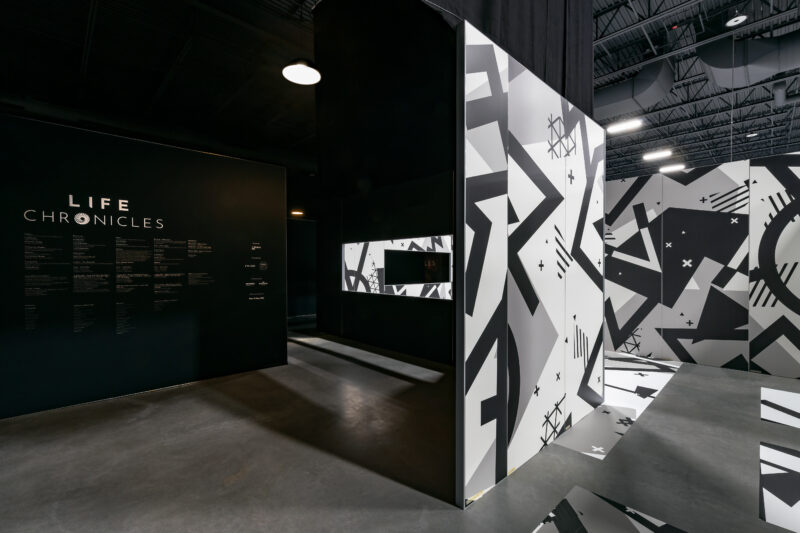
Challenge: Throughout construction, the tenant issued four rounds of interior redesigns, including modifications to the main lobby, retail area, and restroom finishes. Many specified finishes were imported from Italy—such as tile and partitions—and were either delayed or unavailable due to supply chain constraints. These revisions required re-coordination across multiple trades and created potential schedule impacts.
Solution: Peak facilitated continuous design coordination and conducted impact reviews after each redesign. Equivalent domestic materials of comparable quality were sourced to maintain the design intent while avoiding shipping delays. Each change was quickly communicated through revised drawings, trade meetings, and updated RFIs to prevent scope conflicts. Despite the frequent changes, the team’s responsiveness and collaboration allowed construction to continue seamlessly, preserving the aggressive completion timeline.
WEATHER IMPACTS AND SCHEDULING ADJUSTMENTS
Challenge: Extended rain periods and unpredictable weather in the early construction phases caused significant lost workdays, particularly during pile installation and slab pours. These weather setbacks threatened to delay critical-path activities.
Solution: Peak re-sequenced construction activities to maximize productivity, even in adverse weather. The team implemented double shifts and weekend work, and strategically scheduled interior build-out and overhead trades during non-weather-dependent phases. By overlapping scopes and adding crews, Peak successfully mitigated weather impacts and kept the project on schedule.
OUTCOMES
Despite the project’s inherent complexities—sub-standard soil conditions, limited site access, frequent design changes, and weather impacts—Peak Construction delivered the EXP Experience Center ahead of schedule, turning the building over two weeks before the tenant’s anticipated opening date.
The Village of Rosemont, the tenant, and the design team praised Peak’s collaboration, communication, and ingenuity. From absorbing the cost of unexpected issues to re-engineering foundation and retaining wall solutions, Peak demonstrated its core philosophy throughout the build: doing the right thing, every time.
The EXP Experience Center stands as a model of engineering precision, integrity-driven decision-making, and adaptive problem-solving—and a testament to Peak’s expertise in managing complex, high-profile projects from concept through completion.
HOW PEAK GETS IT DONE
At Peak Construction, getting it done means more than completing a building—it means delivering on promises, protecting partnerships, and doing what’s right even when it’s hard.
On the EXP project, that meant driving 180 piles through unpredictable sub-standard soil without compromising quality, maintaining open access on a site barely large enough for a crane, and handing over a first-of-its-kind entertainment venue weeks ahead of schedule. It meant absorbing unexpected costs to preserve relationships, finding smarter engineering solutions to protect budgets, and communicating relentlessly to keep every stakeholder aligned.
That’s how Peak gets it done: Through partnership over profit, proactive problem-solving, and a hands-on commitment to excellence that never wavers—no matter how complex the challenge.
Contact Peak Construction about your next project.