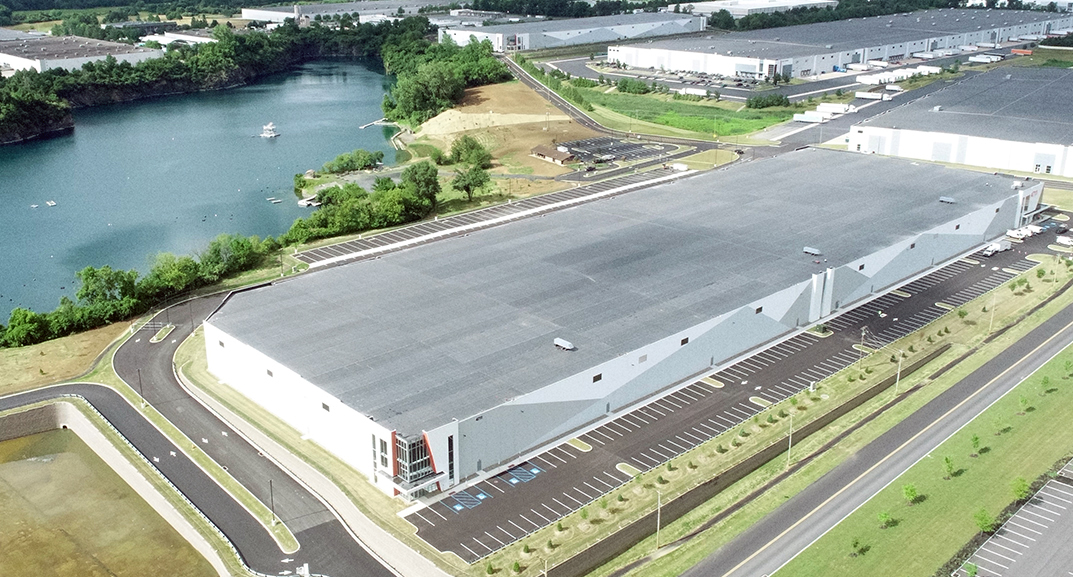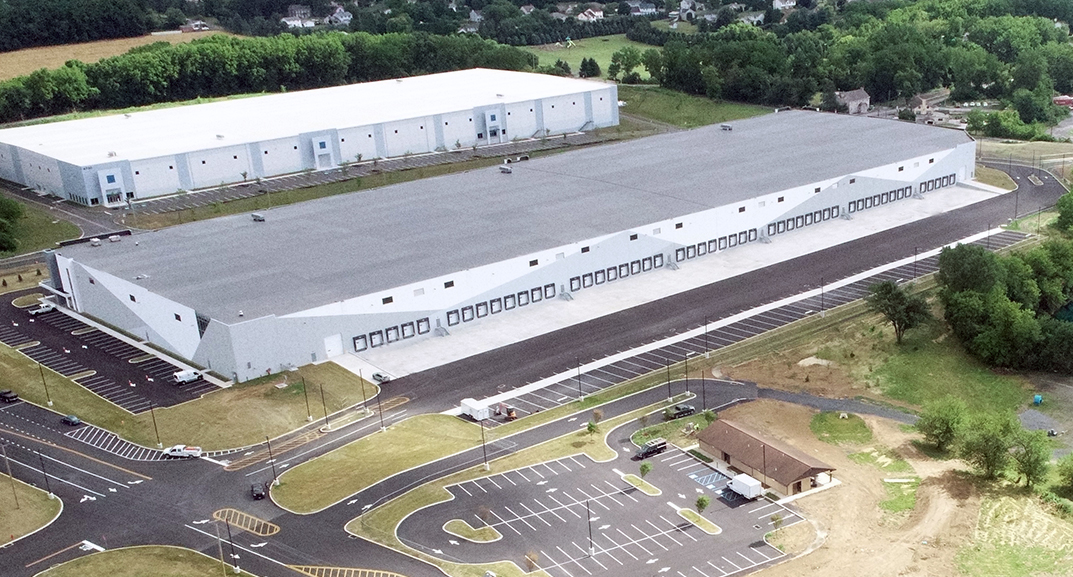

Challenge: Peak experienced a number of unique challenges on this 2-building, 287,455 SF and 300,864 SF, LEED Silver project. The two building sites were in separate townships, linked only by a connecting utility road which had a large water quarry on one side and a neighboring building on the other. There were design and permitting conflicts that caused significant delays, during a period of escalating materials and energy (fuel) costs. Additionally, the scope included three underground stormwater basins, extensive retaining wall scopes, the construction of a 12” watermain /gas main running through both sites down through the connector road, and road widening of the main road entering the site.
Solution: Peak worked diligently with all stakeholders to alleviate the various challenges on this project. The site design and permit issues caused a 6-month delay to the project start. To mitigate the impacts, Peak initiated a redesign of the building from tilt-wall exterior wall panels to precast “on the fly”. This strategy eliminated tilt-wall crane impacts to sitework progress and underground basin construction. Peak also created a special logistics plan to accept pre-ordered, long lead materials on site to diminish cost escalation risks. Detailed logistics and planning were used to install the three underground stormwater basins and the 12” water/gas main serving both buildings running under the connector road. To maintain schedule, the water lines began simultaneously at either end and met at the pinch point. However, the installation conflicted with retaining wall construction on the 30ft wide connector road, flanked by the quarry and an adjacent existing building. The quarry side had 50-100ft drops that required substantial safety measures, including fencing, fall protection during retaining wall construction, and specific Peak site orientation safety requirements. Installation of the retaining wall shut down the road, so alternative routes throughout the property were negotiated and strategically planned to navigate between the two sites. Working with two separate townships on one project required intensive communication and coordination amongst many parties to ensure a successful outcome. Overall, the project team delivered the project to a happy client ahead of schedule due to the value add of substituting precast for tilt-wall; ensuring paving could be completed before the end of the season. Furthermore, Peak was able to compete the interior build out scope while waiting for permanent power and gas from the utility company.